Properties of Matter
There are many properties in the objects around us. Some look or feel a certain way. Others react differently under certain conditions.
Matter
Matter is all around us and it can be made up in different ways.
| Composition | Definition | Visual Example |
| Substance |
| |
| Element |
|
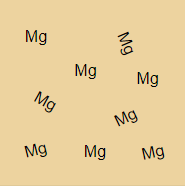 |
| Compound |
| 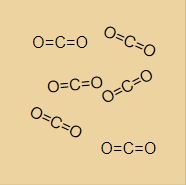 |
| Mixture |
| 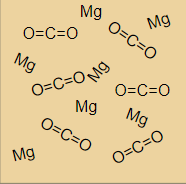 |
Particle Diagrams
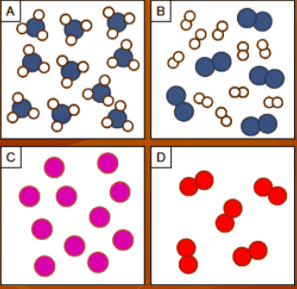 |
|
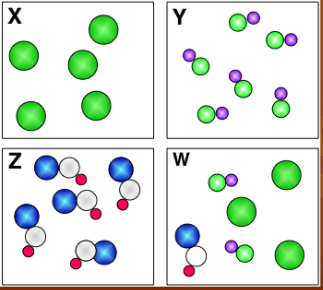 |
|
Physical Properties
A physical property relates to the physical characteristics of an object. Think: how it looks or feels
| Physical Property | Definition | Examples |
| Melting Point |
| |
| Boiling Point |
| |
| Flexibility | Ability of a material to bend and hold its shape |
|
| Elasticity | Ability of a material to stretch and return to its original shape |
|
| Density |
A measure of how tightly packed molecules are in an object d = m/V |
|
| Phase or state of matter | Solid, liquid, gas |
|
| Texture | Relative smoothness of an object |
|
| Color | Depends on reflected light |
|
| Hardness | Resistance to scratching |
|
| Solubility | Ability of a material to dissolve in another substance at a given temperature and pressure | |
| Transparency |
How well light passes through an object |
|
| Transparency Levels |
|
|
| Metallic Character |
whether something is a metal, nonmetal, or semimetal (metalloid) determines various properties, like conductivity, malleability, etc. |
|
| Metallic Property: Conductivity |
ability of material to draw electricity through it lower electronegativity = higher conductivity |
|
| Metallic Property: Luster | A measure of how well light reflects off an object (how shiny it is) |
|
| Metallic Property: Malleability | Ability to hammer (mallet) a material into sheets |
|
| Metallic Property: Ductility | Ability to pull a material into wires |
|
| Metallic Property: Magnetism | The force of attraction or repulsion of magnetic materials; occurs strongly with iron (Fe), cobalt (Co), nickel (Ni) |
|
Chemical Properties
A chemical property relates to how objects react to other objects. Think: what an object does or how it reacts
| Chemical Property | Definition | Example |
| Flammability | Ability of a material to burn | Burning wood |
| Reactivity | Ability of a material to react under certain conditions | Rusting of iron |
| Toxicity | Ability of a material to be poisonous | Arsenic |
| Corrosiveness | Ability of a material to eat through other materials | Acid |
| Oxidation State | Ability of a material to carry a charge while bonding | Na forming a +1 charge while bonding by giving away an electron |
Changes in Properties
Properties can be alter, sometimes through force (like smashing something) or through application of energy (like heating something up). The type of change that takes place is determined by whether the chemical structure remains intact.
| Type of Change | Physical Change | Chemical Change |
| Definition | Change from one physical characteristic to another. The molecule structure does NOT change | Change one chemical characteristic to another. The molecule structure DOES change. You get new stuff. |
| Examples |
|
|